For most, the word “global trade” conjures up images of something nebulous and distant: a phenomenon that plays itself out behind the curtains of the global economy in high offices, in the boardrooms of multinationals, and in the chambers of government. That’s not the case. In actual fact, global trade is a dynamic organism, a system that’s constantly changing, that’s complicated, and that is driven by decisions made on an everyday basis.
Logistics is the driving force of trade. If you think of global trade as a highway, logistics is what runs the road network on which it runs.
The truth is that the goods in your hands have crossed the planet.
Every product that lands in your hands has almost certainly crossed the globe at some point.
It could have been designed in one country. Built in another. Assembled in yet another. Housed in a distant warehouse. Delivered at home.
And while that may sound chaotic, it is precisely the kind of trade that can be optimized for cost, efficiency, and regulation.
Global trade, to a certain extent, is the ability of this juggling act to work without any piece collapsing into another.
Why Do Countries Trade Instead of Making Everything Themselves?
Because, at present, no country on Earth can make everything it needs. But, that’s okay.
Countries do what they do best.
Some have cheaper labor. Some have the necessary technology to create the goods they sell. Some have the raw materials needed to make those things. Others are connected to a great infrastructure that can get those materials to where they’re needed and get those products to customers on time.
They trade goods that they can produce at a cheaper cost for those that they can produce at a much higher cost elsewhere.
In this context, what we’ve created as a global trading ecosystem depends entirely on the ability of goods and services to get from one nation to another.
What Does Logistics Have to Do With It?
Without logistics, trade is only a theory.
In order for something produced in one nation to reach another, it has to be transported there.
There are shipping lanes (by sea, air, and land), there are customs regulations and paperwork to clear, there are storage facilities in transit centers to wait for transportation, there are delivery schedules that cross multiple time zones, and there are the risks that things can go wrong and that goods get delayed due to weather, or political turmoil.
And all of it takes place without the logistics team knowing that a single error in shipping papers, in shipping routes, or in delivery time could cause massive delays across the entire global supply chain.
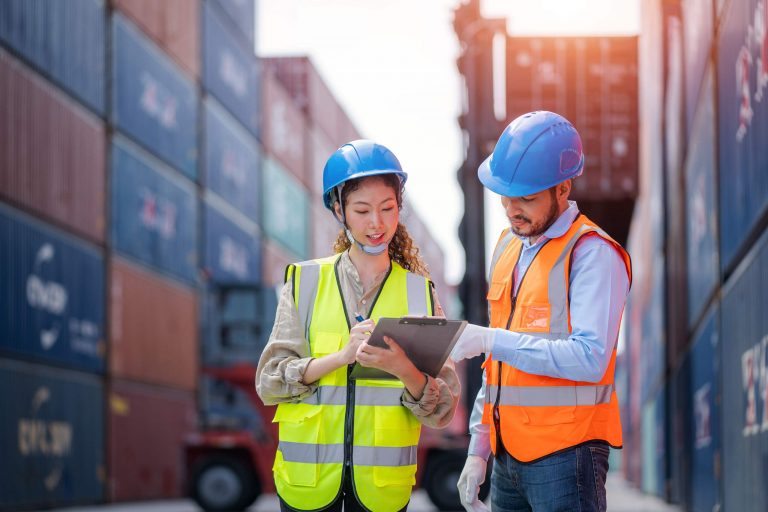
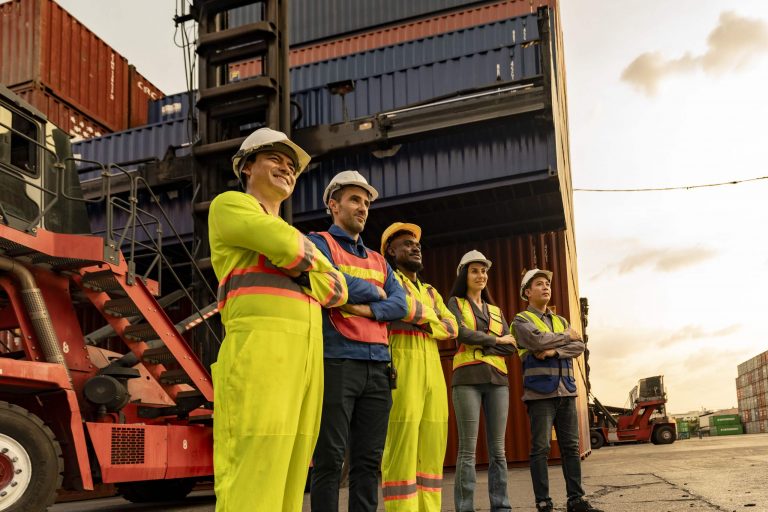
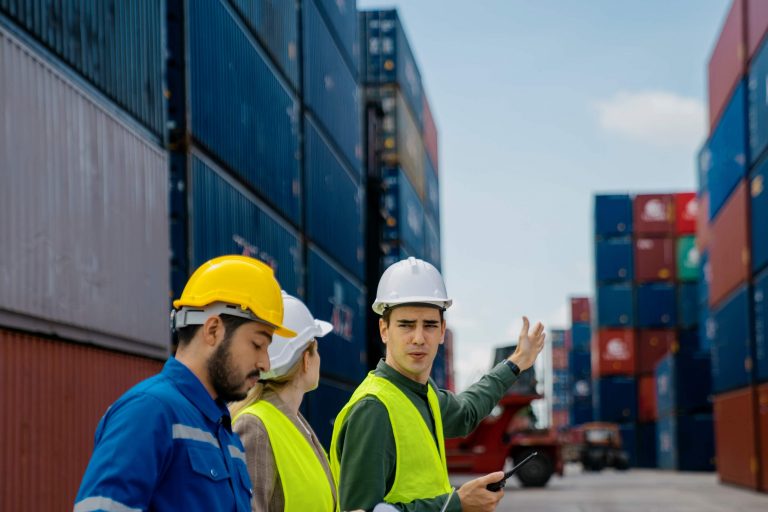
That’s what makes people who work in logistics vital to the system. They’re the ones who make sure that nothing goes wrong.
It’s complicated.
What’s Behind That ‘One-Click’ Delivery?
It’s simple. Order online from an online retailer. Receive it. Easy, right?
That’s not the simple part. That’s what you’re seeing. And behind the scenes, a lot more is going on.
There’s the supplier that’s working in another country, the freight forwarders that are managing the goods, the port officials that are handling the freight, the customs agents that are ensuring that the goods pass inspection into a country, and the local delivery company that’s sending the product to you.
Every single part of the supply chain is doing what it’s supposed to do, but every single part also needs to meet the requirements of other parts of the system and do so while also adhering to certain costs and rules, as well as navigating around certain risks.
Everything has to work perfectly for the delivery to get to you on time.
Global Trade Is Getting Faster (And Frail)
The global supply chain is more efficient now than ever before, but that’s a mixed blessing.
It’s fast, the goods are cheaper because the system is optimized to use global labor pools, technology connects all the pieces together, and the process is faster.
But a single blocked port, a single political change, a single hurricane, a single spike in the price of crude oil and gas, and the entire system can come undone.
That’s why logistics professionals now focus not just on getting things moving fast, but also on making the supply chain as robust as possible.
Technology Changes Everything
The global supply chain is getting digital.
Real-time Tracking of Shipping Containers. Companies can follow their shipments across continents to the second and to the degree of temperature, humidity, and condition.
E-Government and E-Commerce. Countries are using digital systems to clear customs more quickly and reduce the likelihood that a shipment will get bogged down at the border.
Predictive Analytics. Companies use artificial intelligence to predict delays, demand, shortages, and best shipping routes and to proactively manage and prevent them before they happen.
The Global Supply Chain Is Getting Stronger. And, It’s Getting Weaker.
In the last few decades, the global supply chain has become increasingly automated, more digitally connected, and more real-time.
In the last few decades, the global supply chain has also become increasingly fragile, more unpredictable, and more dependent on the expertise of people in the field.
The world is getting smaller. We have to be more aware.
In Conclusion
Global trade isn’t a science, it’s a science of coordination. Every time a product is manufactured, every time it is shipped, every time it is delivered, the global trade system is dependent on a complex system of decisions that make things work.
The best part? We’re not done yet. As the supply chain continues to change, the people in logistics will help determine how global trade continues to change.